
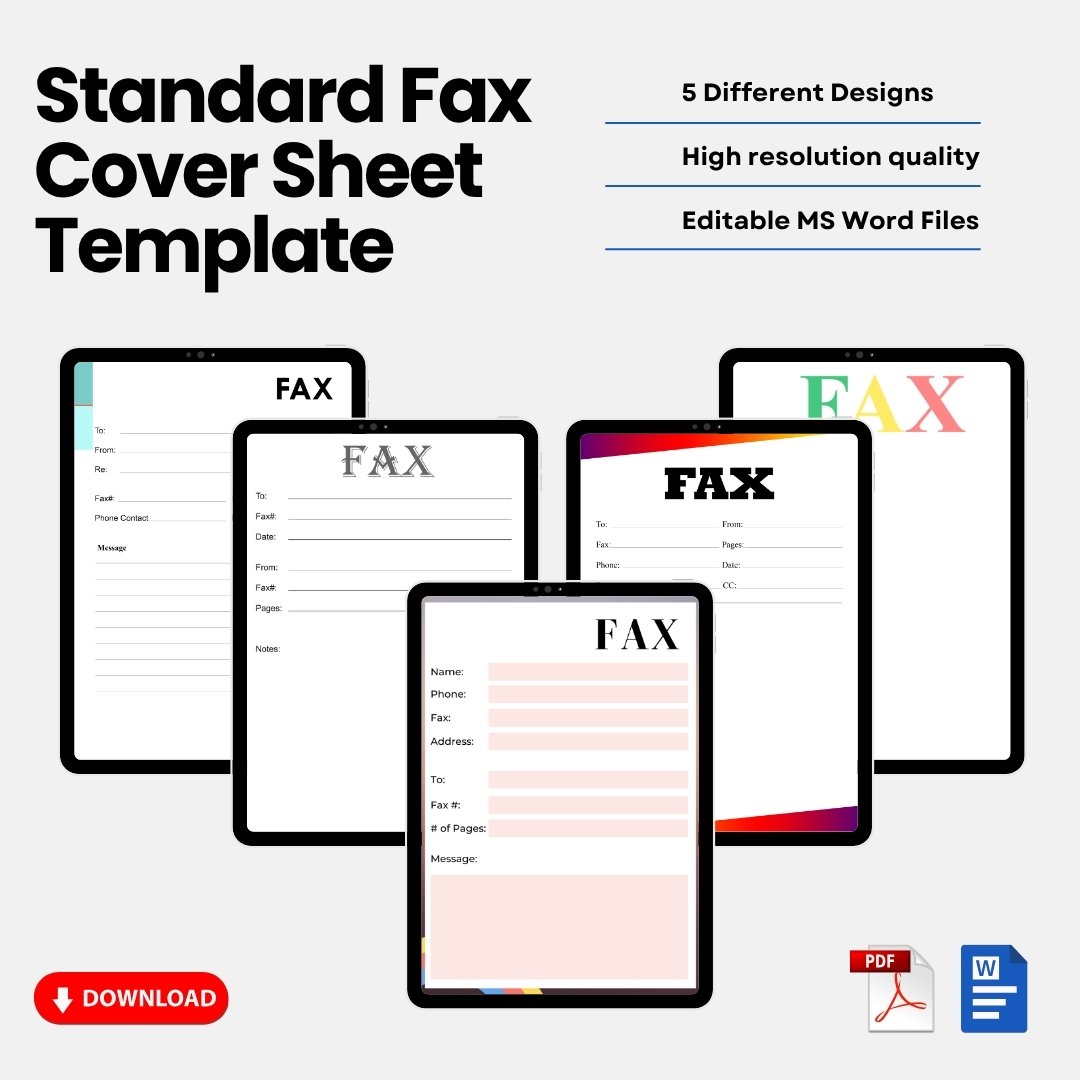
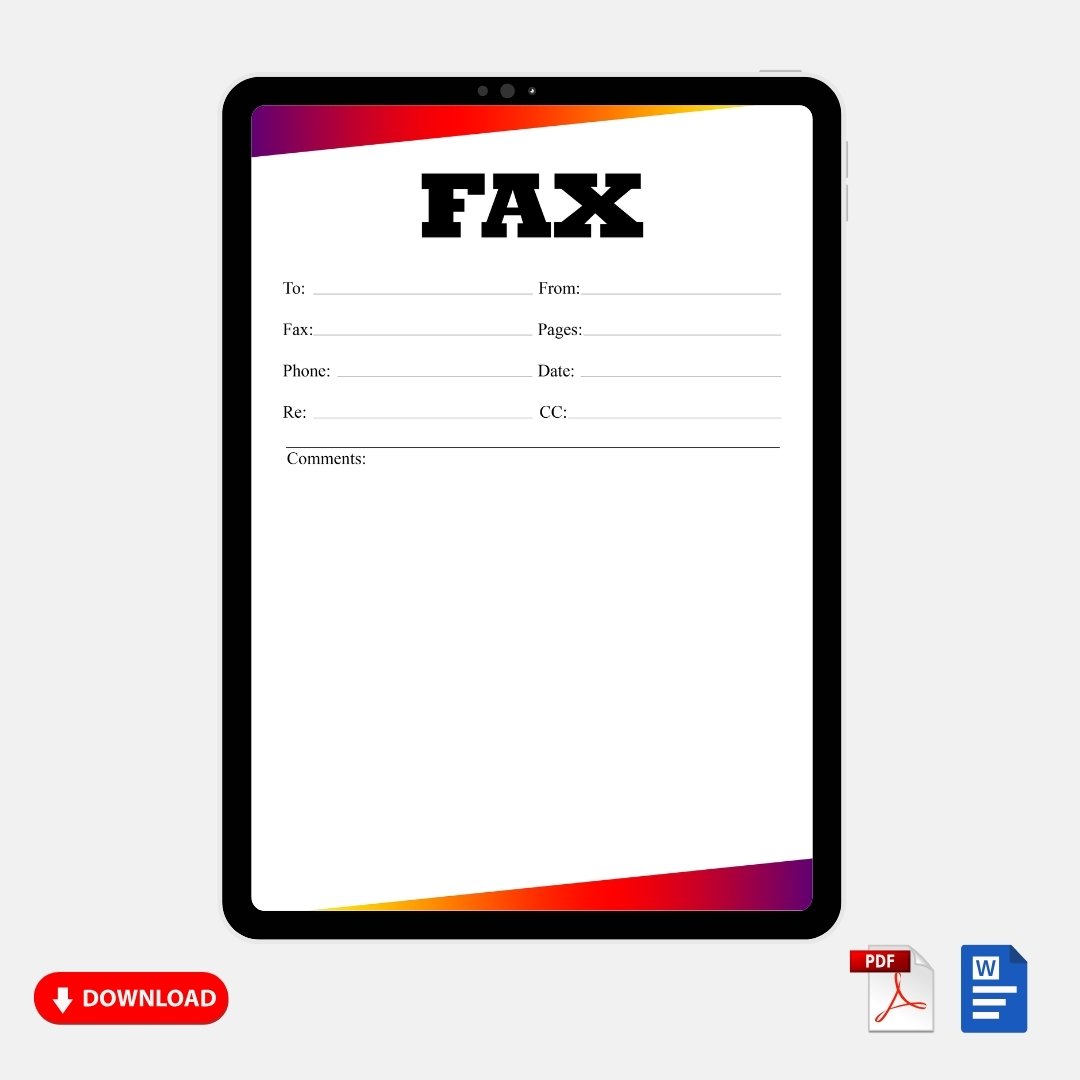
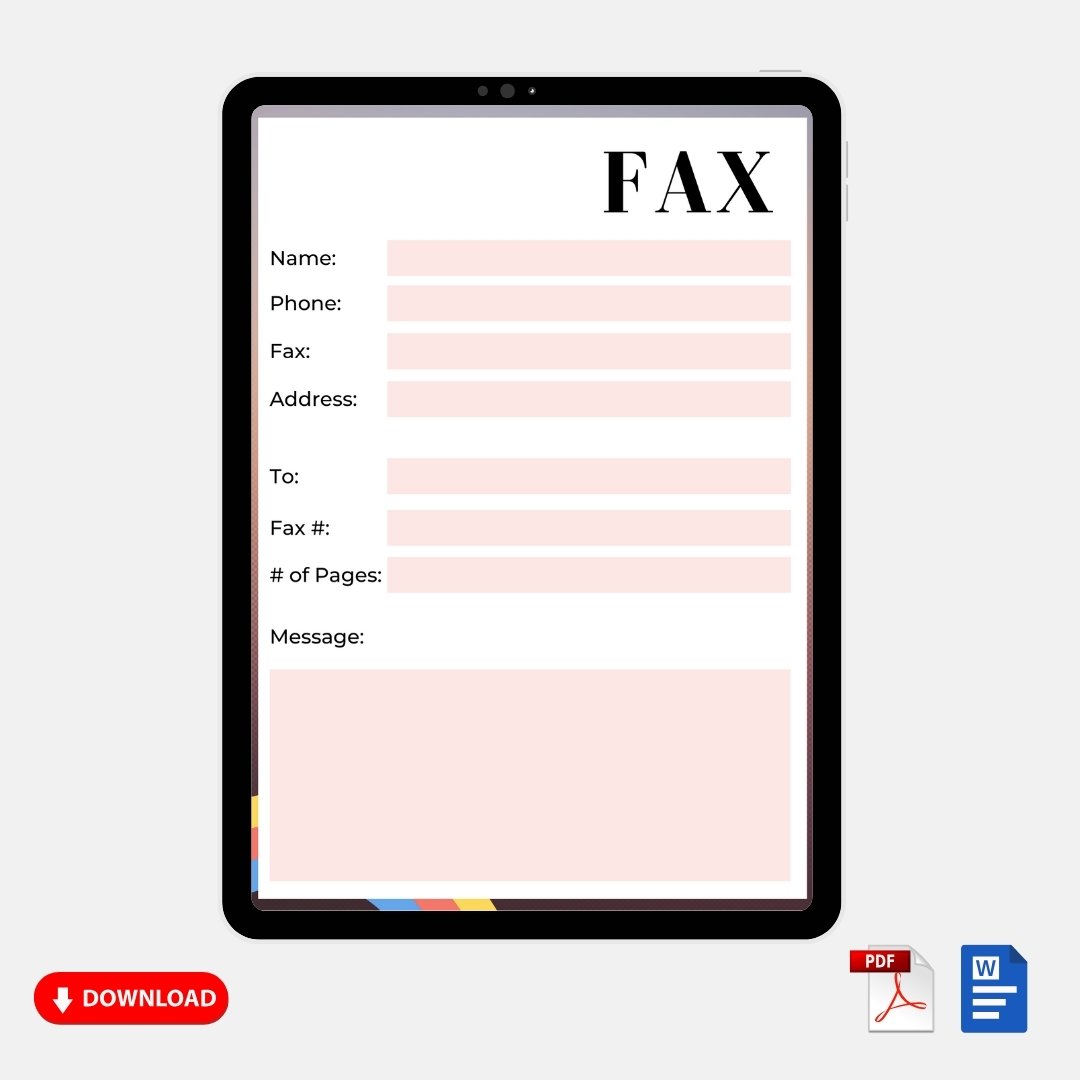
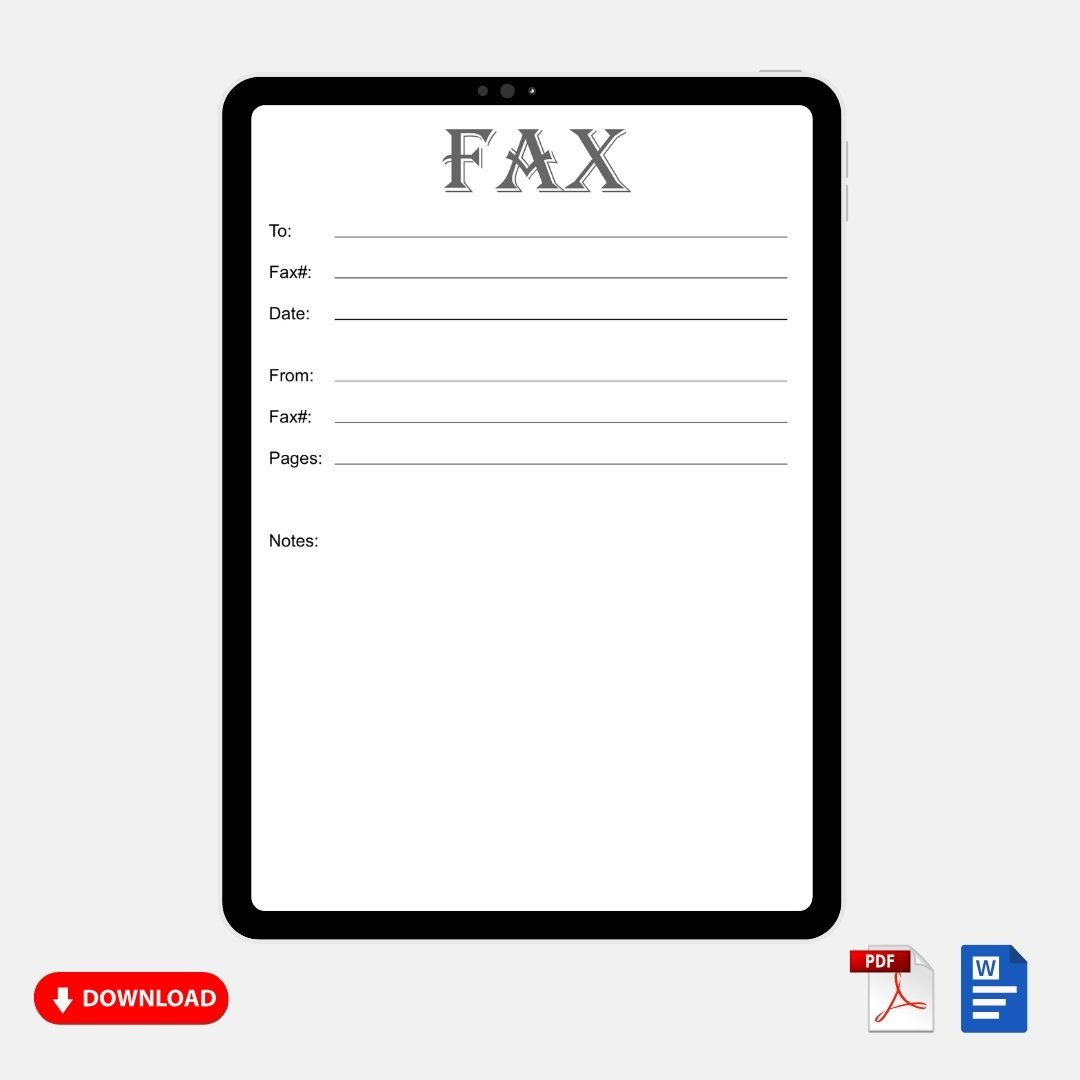
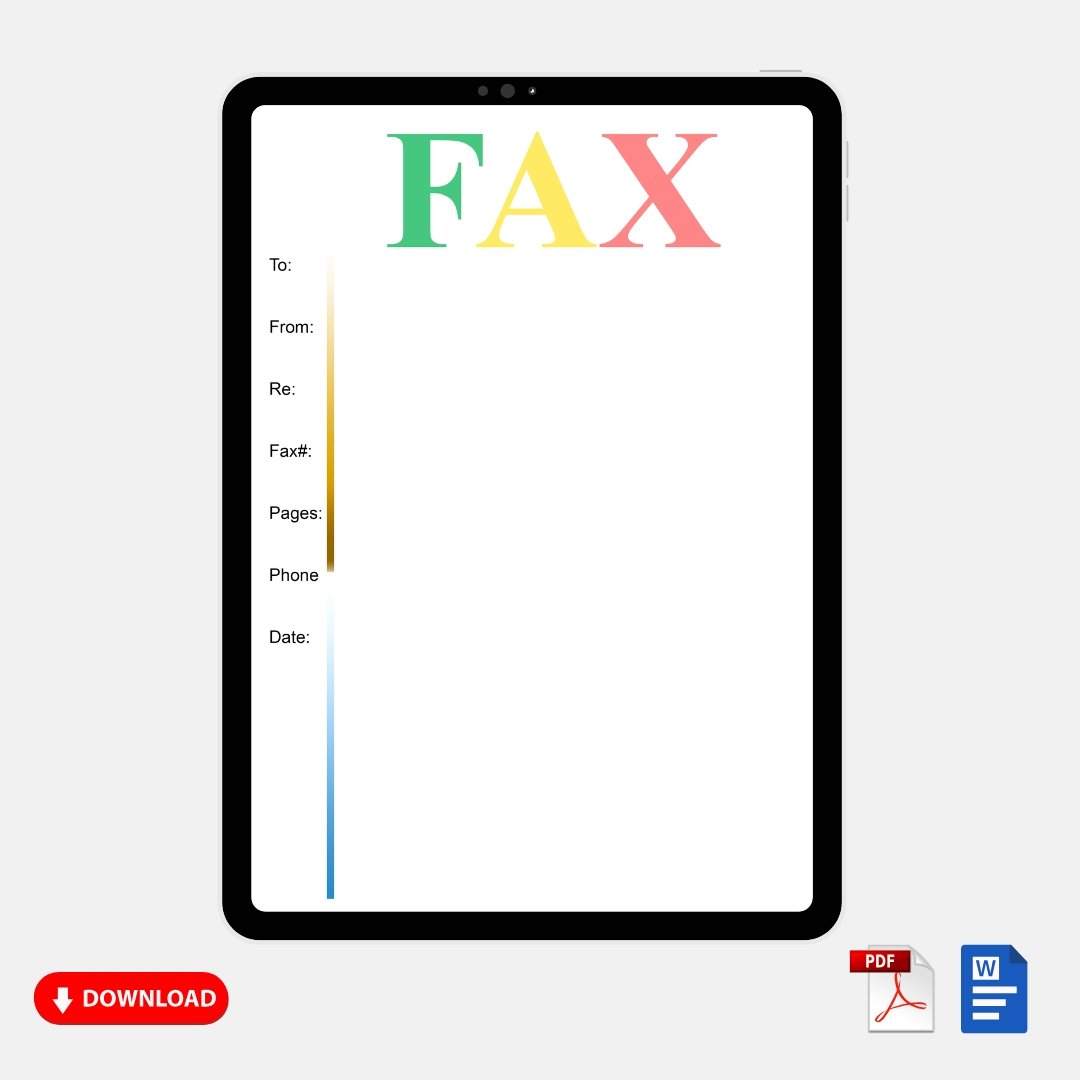
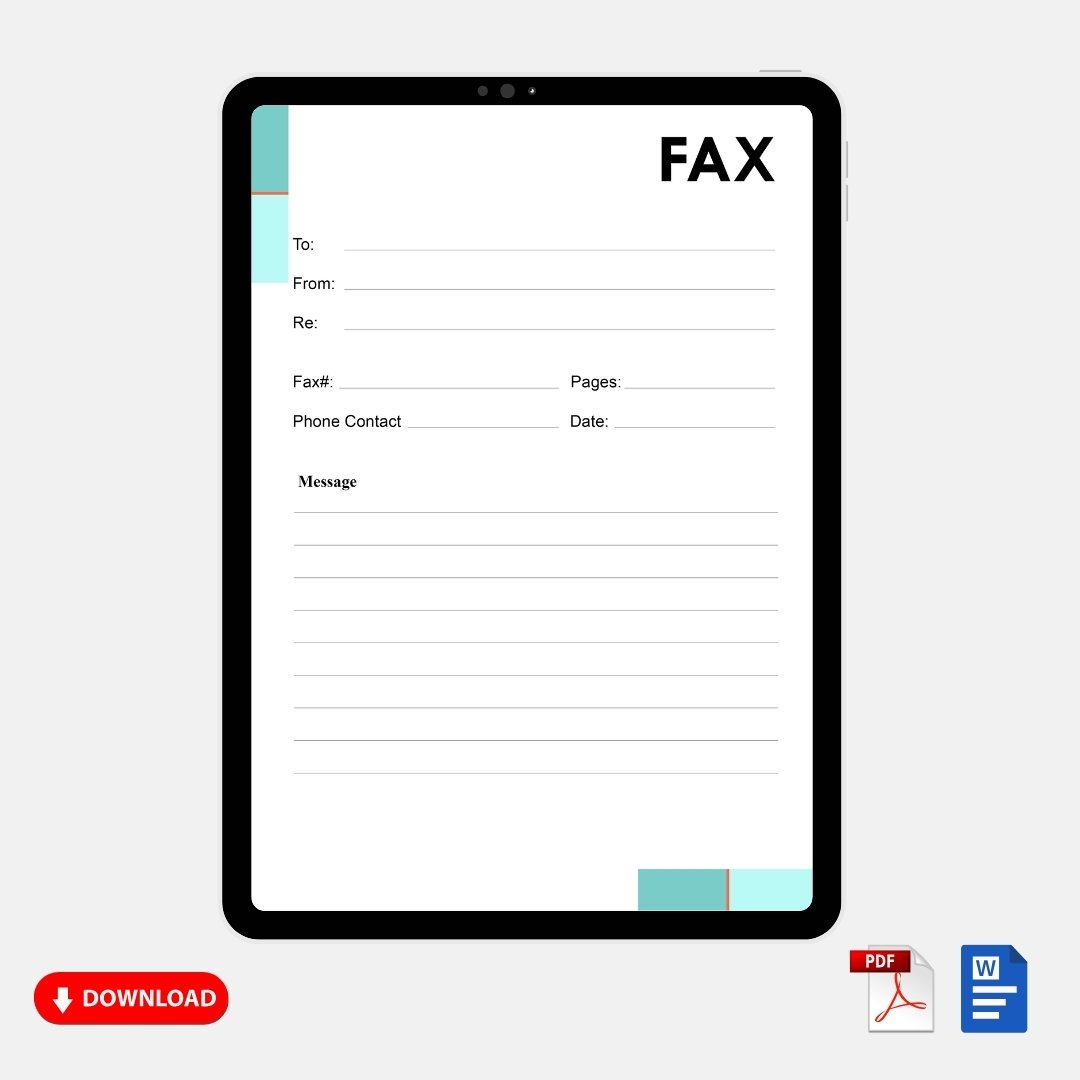
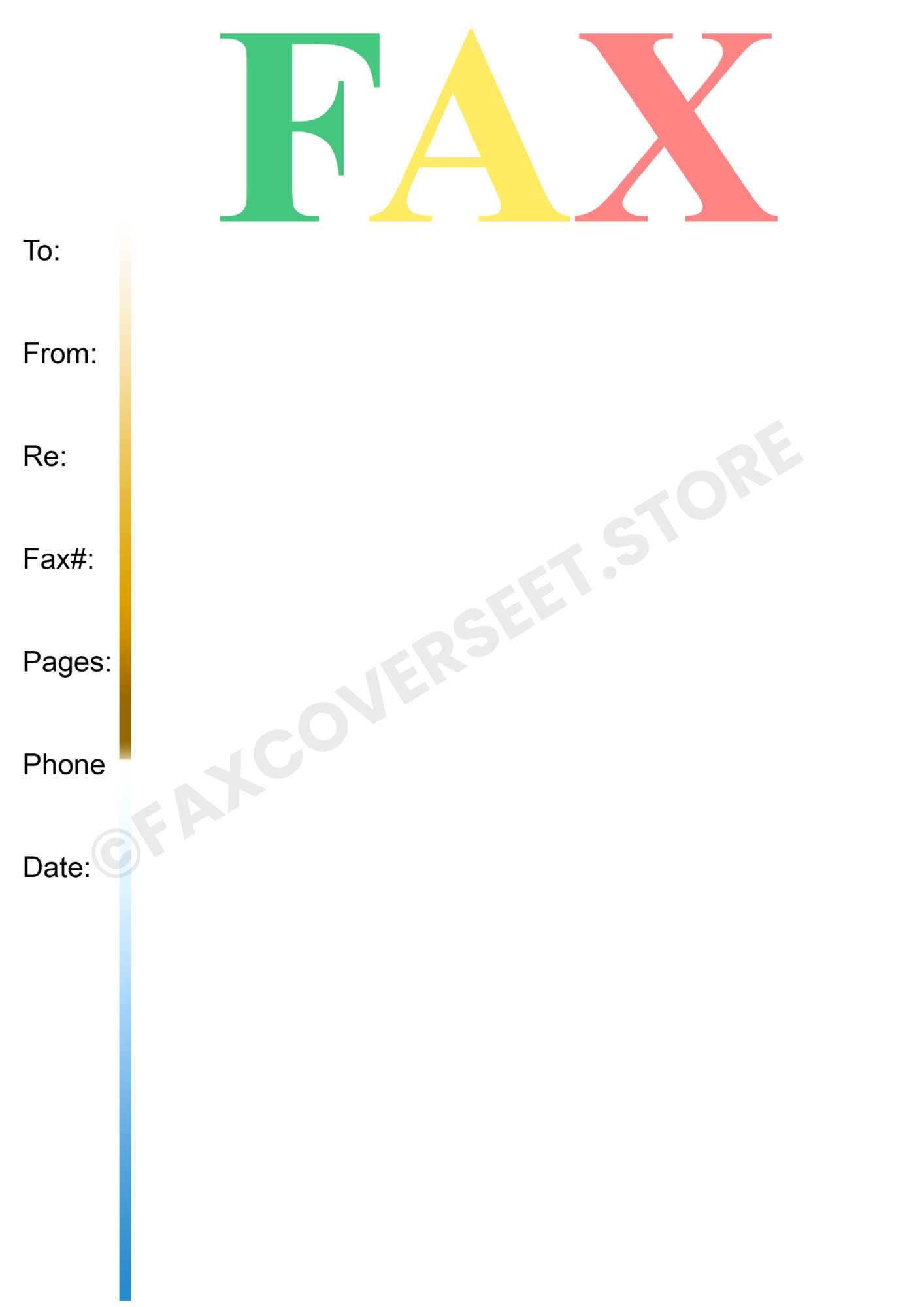
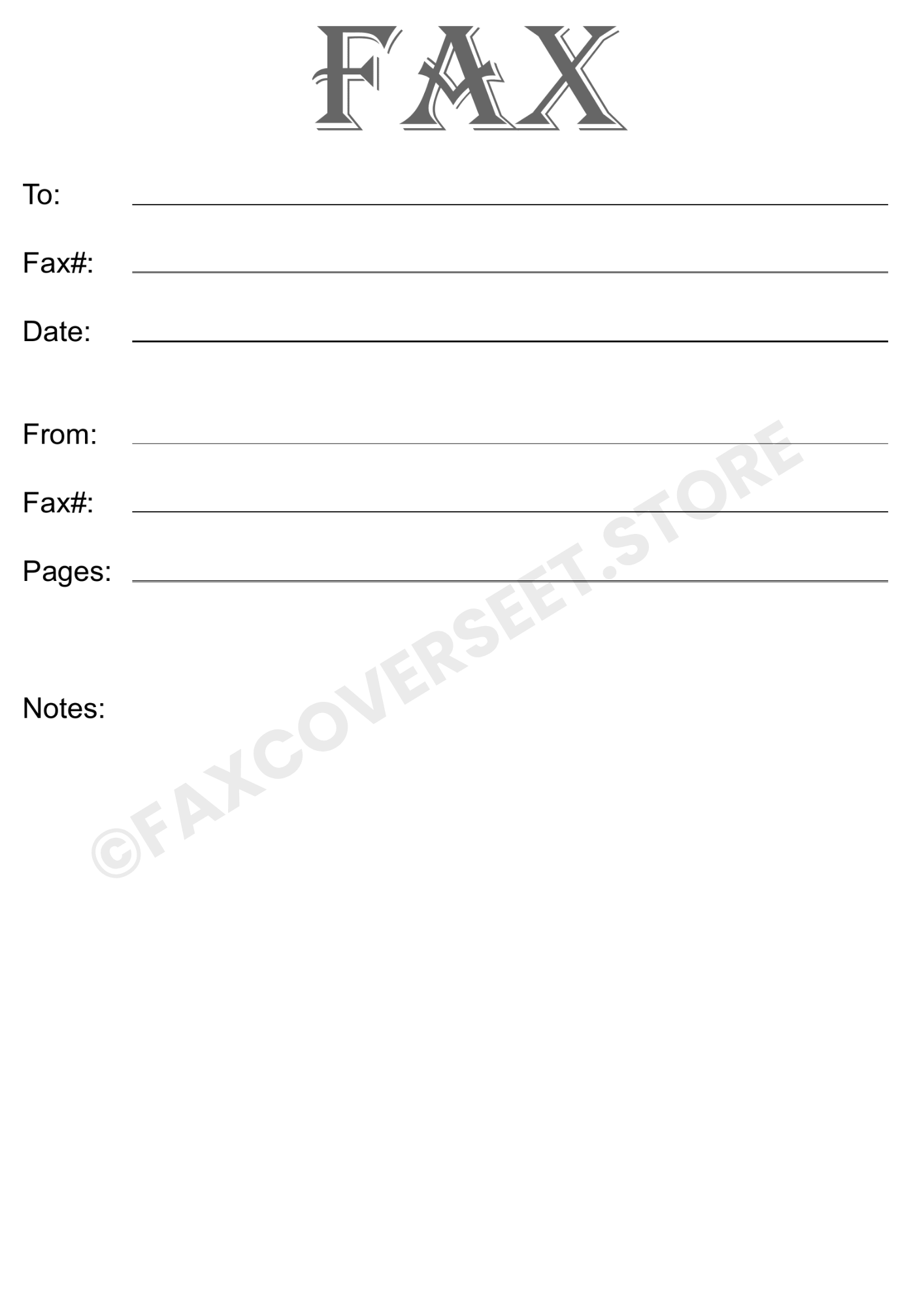
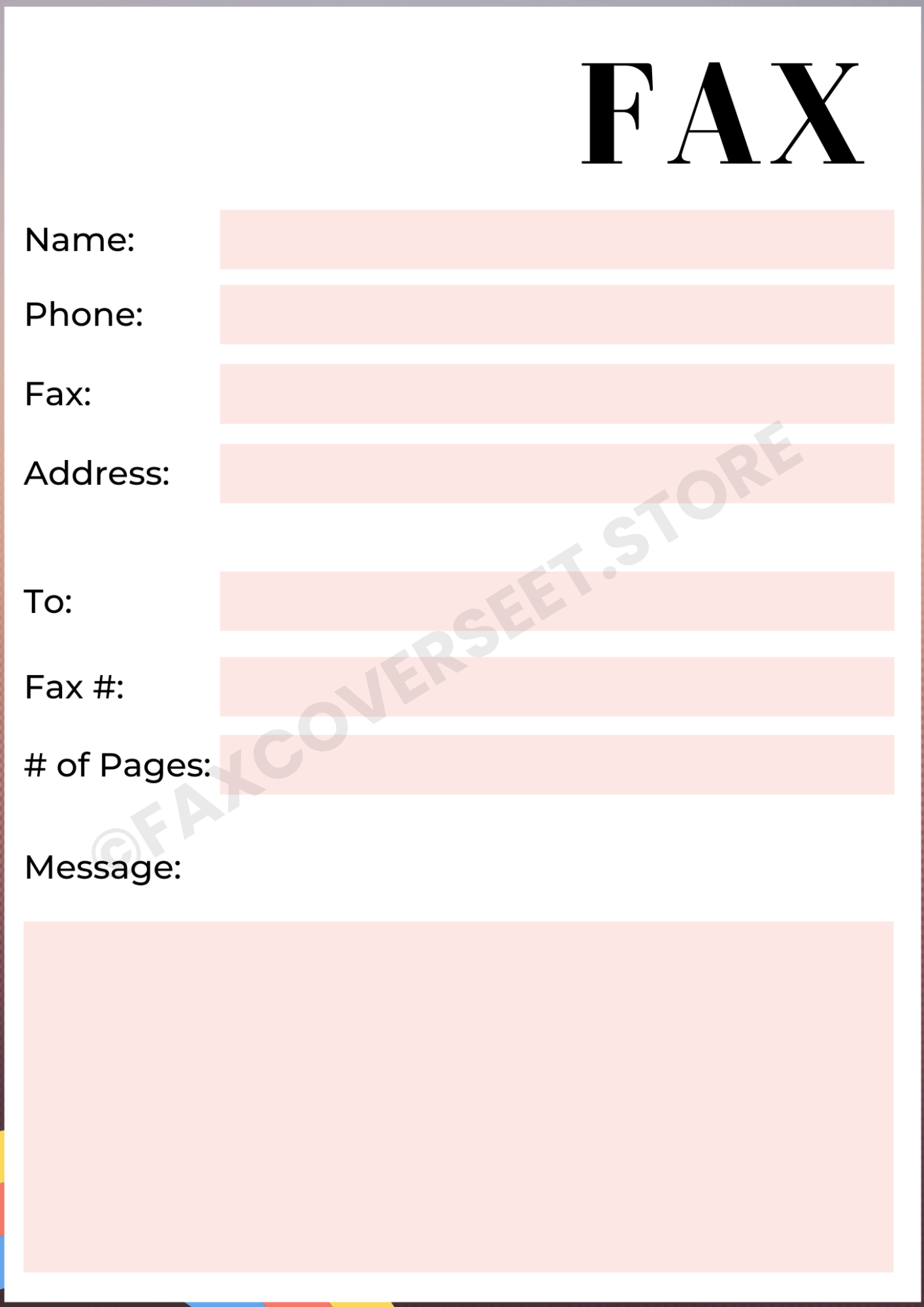
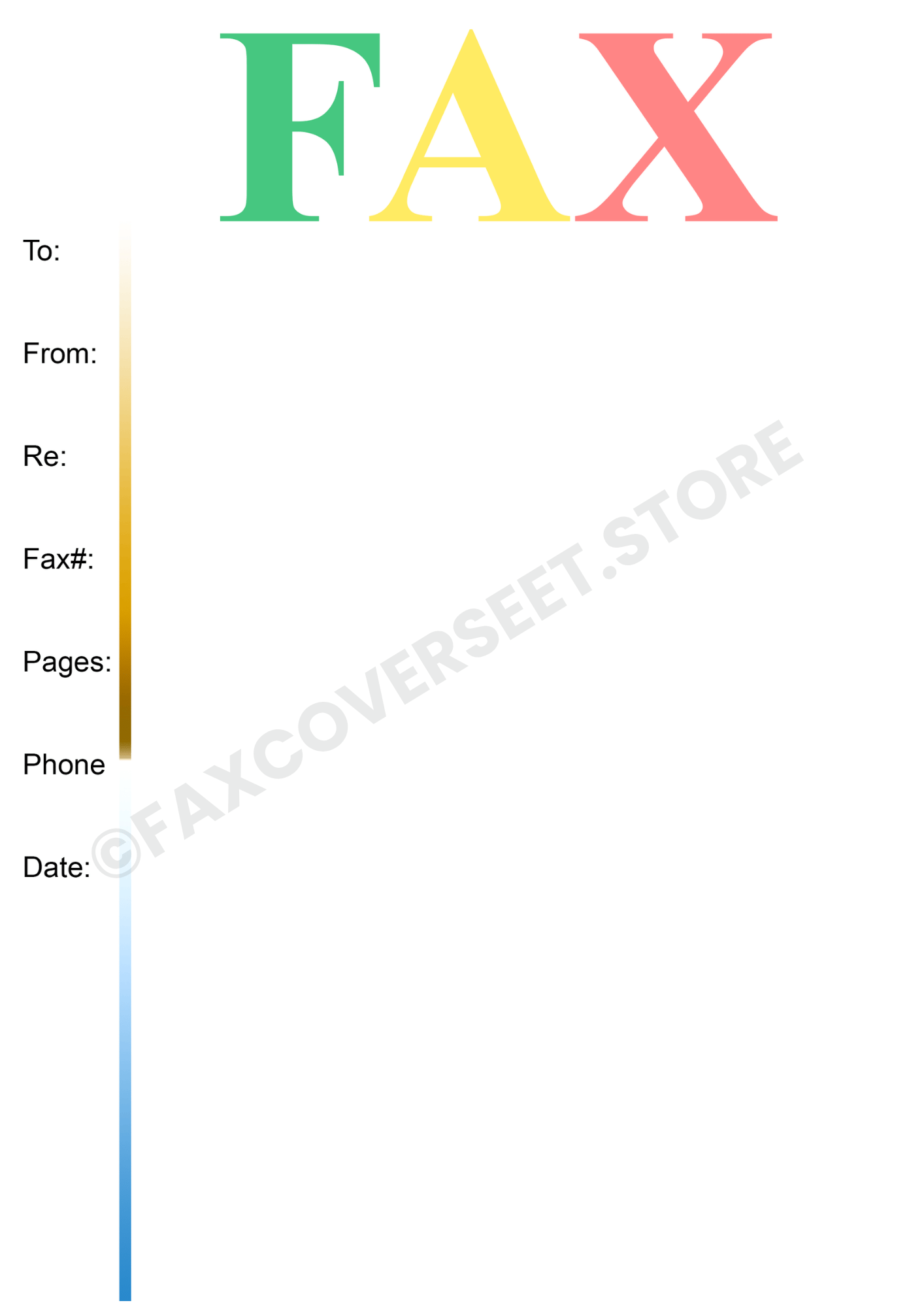
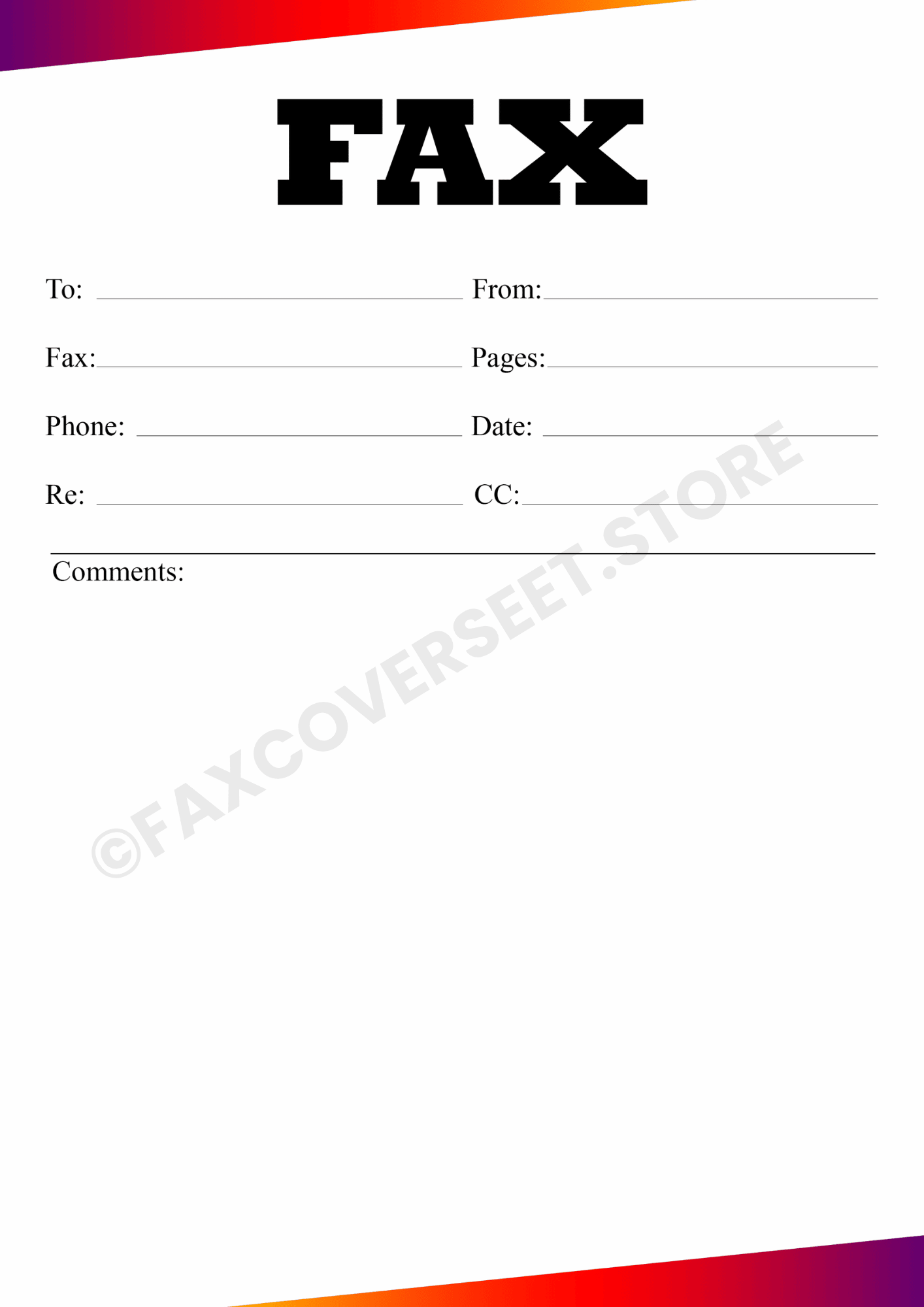


A Standard Fax Cover Sheet is a professional document placed at the beginning of a fax transmission to provide essential details about the sender, recipient, attached documents, and purpose of the communication. It helps organize fax exchanges, improves document identification, and ensures the recipient understands the context before reviewing the attached pages.
Whether you are sending business documents, office paperwork, legal files, invoices, reports, or administrative forms, a standard fax cover sheet provides a clean and structured format for professional communication.
Our Standard Fax Cover Sheet Templates are designed for quick and easy use. The collection includes printable PDF files and editable Microsoft Word templates, allowing you to customize details, add information, and create professional-looking fax transmissions within minutes.
Printable Standard Fax Cover Sheet Template PDF & Editable Word
Stay organized and professional with our collection of 5 Standard Fax Cover Sheet Templates, created for both business and personal document communication.
Each template provides a simple and effective layout with important fax fields, including:
- Sender information
- Recipient details
- Fax number
- Phone number
- Date
- Subject line
- Total number of pages
- Message section
- Additional notes or instructions
These templates are suitable for offices, businesses, freelancers, professionals, and individuals who need a reliable fax cover page for everyday communication.
What You Will Receive:
- 5 High-quality PDF fax cover sheet templates
- 5 Editable Microsoft Word (.docx) files
- Print-ready designs
- Standard US Letter size format (8.5 × 11 inches)
- Easy-to-edit layouts
- Clean and professional formatting
You can use the templates as they are or customize them with your company name, contact details, logo, or additional information.
What Is a Standard Fax Cover Page?
A Standard Fax Cover Sheet is the introductory page attached before the main fax documents. It provides important details that help the recipient identify the transmission and understand its purpose.
Unlike specialized fax cover sheets designed for specific industries, a standard fax cover sheet follows a universal format that works for different types of communication.
It acts as a communication guide by providing details such as:
- Who sent the fax
- Who should receive it
- What documents are included
- How many pages were transmitted
- What action may be required
A properly completed cover sheet helps prevent confusion and allows recipients to process faxed documents more efficiently.
Standard fax cover sheets are commonly used for:
- Business communication
- Office documentation
- Client correspondence
- Legal paperwork
- Financial documents
- Administrative forms
- Personal document submissions
Why Use a Standard Fax Cover Letter?
Although fax communication is simple, sending documents without proper identification can create unnecessary confusion.
A recipient may receive multiple fax transmissions throughout the day. Without a cover sheet, it may be difficult to determine:
- Who sent the documents
- Why the fax was sent
- Whether all pages were received
- Who should review the information
- How to contact the sender
A Standard Fax Cover Sheet solves these problems by providing all essential details on the first page.
It creates a more organized communication process and helps both the sender and recipient manage documents efficiently.
Benefits of Using a Standard Fax Cover Letter
Creates a Professional Appearance
A well-designed fax cover sheet gives your documents a more organized and professional appearance.
Whether you are communicating with clients, vendors, organizations, or internal teams, a properly formatted cover page creates a positive impression.
Helps Identify Documents Quickly
Recipients can immediately understand important information before reviewing the attached pages.
A standard fax cover sheet clearly displays:
- Sender name
- Recipient details
- Organization information
- Subject of the fax
- Number of pages
- Contact details
This saves time and makes document handling easier.
Improves Fax Organization
A cover sheet separates communication details from the actual documents being transmitted.
This makes it easier to:
- Sort incoming faxes
- Track document exchanges
- Maintain records
- Locate important information later
Reduces Communication Errors
Including accurate sender and recipient details helps minimize mistakes during document transmission.
A complete cover sheet ensures that recipients know:
- Where the fax came from
- Who it is intended for
- What documents should be included
Saves Time
Using a ready-made template eliminates the need to create a new fax cover page every time.
Simply enter your information, review the details, and send your fax.
Suitable for Multiple Uses
The simple format of a standard fax cover sheet makes it useful across many industries and situations.
It can be used for:
- Business documents
- Contracts
- Reports
- Applications
- Invoices
- Forms
- Administrative paperwork
Who Can Use a Standard Fax Cover Page?
A Standard Fax Cover Letter Template is useful for anyone who needs to send documents in a structured and professional way.
Businesses and Companies
Businesses commonly use fax cover sheets for sending:
- Contracts
- Client documents
- Invoices
- Purchase orders
- Agreements
- Reports
- Vendor paperwork
A consistent fax format helps companies maintain professional communication standards.
Small Business Owners
Small businesses can use standard fax cover sheets for:
- Customer communication
- Supplier documents
- Service records
- Business forms
- Administrative paperwork
It helps small businesses present documents professionally without requiring complex systems.
Corporate Offices
Large organizations often exchange documents between departments, branches, and external partners.
A standard fax cover sheet provides a consistent format for:
- Internal communication
- Department transfers
- Business records
- Official correspondence
Legal Professionals
Law firms and legal departments may use fax cover sheets when sending:
- Agreements
- Notices
- Supporting documents
- Client paperwork
- Administrative records
A structured cover page helps identify important legal documents before review.
Healthcare Administration
Medical offices and healthcare organizations may use fax cover sheets for administrative communication and document exchange.
Examples include:
- Office forms
- Provider communication
- Administrative paperwork
Organizations should always follow appropriate privacy and security practices when transmitting sensitive information.
Educational Institutions
Schools, colleges, and universities may use fax cover sheets for:
- Administrative forms
- Department communication
- Official documents
- Institutional paperwork
Individuals
Individuals can also use a standard fax cover sheet when sending:
- Applications
- Personal records
- Forms
- Requests
- Supporting documents
Common Uses of a Standard Fax Cover Sheet
A Standard Fax Cover Sheet can be used for various professional and personal document transmissions.
Business Documents
Businesses can include a cover sheet when sending:
- Proposals
- Agreements
- Reports
- Financial documents
- Client information
Invoices and Billing Documents
Companies often use fax cover sheets when transmitting:
- Invoices
- Payment records
- Billing paperwork
- Account-related documents
Legal Documents
Legal professionals may use fax cover pages for:
- Contracts
- Signed agreements
- Case-related paperwork
- Official notices
Administrative Communication
Organizations can use fax cover sheets for:
- Internal forms
- Approval requests
- Office records
- Department communication
Client and Vendor Communication
A standard fax cover sheet helps organize communication with:
- Customers
- Suppliers
- Service providers
- Business partners
What Information Should Be Included on a Standard Fax Cover Sheet?
A properly completed Standard Fax Cover Sheet should contain all important details required to identify the sender, recipient, and purpose of the fax transmission.
A clear and complete cover sheet helps prevent communication issues and allows recipients to process documents quickly.
The most common sections include:
Sender Information
The sender section provides details about the person or organization sending the fax.
Include:
- Full name
- Company or organization name
- Department name (if applicable)
- Phone number
- Fax number
- Email address
Providing accurate sender information allows recipients to contact the sender easily if any clarification is required.
Recipient Information
The recipient section identifies the person, department, or organization receiving the fax.
Include:
- Recipient name
- Company or organization
- Department
- Fax number
- Phone number
- Contact details
Always verify recipient information before sending important documents to avoid delivery errors.
Date of Transmission
The date indicates when the fax was prepared or sent.
Including the date helps with:
- Document tracking
- Record management
- Future reference
- Communication history
Subject Line
The subject line briefly explains the purpose of the fax.
A clear subject allows recipients to understand the document before opening the attached pages.
Examples:
- Contract Documents
- Invoice Submission
- Client Proposal
- Application Forms
- Business Records
- Agreement Review
- Project Documents
Avoid using unclear subjects such as “Documents” or “Important Files.”
Reference Number
Organizations may include a reference number to make document tracking easier.
Examples:
- Invoice number
- Customer ID
- Case number
- Project ID
- Purchase order number
This is especially useful for businesses handling multiple document transmissions.
Total Number of Pages
The page count informs the recipient about the complete size of the fax transmission.
Example:
Total Pages: 8 (Including Cover Sheet)
This helps recipients confirm that all pages have been received correctly.
Message Section
The message area provides space for additional instructions or important notes.
Examples:
- Please review the attached documents.
- Kindly confirm receipt.
- Documents submitted for your records.
- Please contact us if further information is required.
Keep the message short, clear, and relevant.
Contact Information
Adding contact details allows recipients to reach the sender easily.
Recommended details include:
- Phone number
- Email address
- Extension number (if applicable)
How to Fill Out a Standard Fax Cover Sheet
Completing a Standard Fax Cover Sheet correctly ensures that your documents are organized and easy for the recipient to understand.
Follow these simple steps:
Step 1: Add Sender Details
Start by entering your personal or business information.
Include:
- Name
- Company name
- Department
- Phone number
- Fax number
- Email address
Accurate sender information helps recipients identify the source of the fax.
Step 2: Enter Recipient Information
Add the details of the person or organization receiving the fax.
Include:
- Recipient name
- Company name
- Department
- Fax number
- Contact information
Double-check the fax number before sending to prevent incorrect delivery.
Step 3: Add the Date
Enter the date when the fax is being transmitted.
The date helps maintain accurate communication records and makes future tracking easier.
Step 4: Write a Clear Subject
Add a short description explaining the purpose of your fax.
Examples:
- Insurance Documents
- Contract Submission
- Payment Information
- Application Documents
- Business Proposal
A clear subject helps recipients prioritize incoming documents.
Step 5: Add Document Description
Briefly explain the documents included with the fax.
Examples:
- Signed agreement
- Completed application form
- Financial report
- Supporting documents
- Client records
This provides additional context before the recipient reviews the pages.
Step 6: Enter Total Page Count
Mention the total number of pages included in the fax.
Example:
Pages: 12 Including Cover Sheet
This helps recipients confirm that the transmission is complete.
Step 7: Add Additional Notes
Use the message section for important instructions.
Examples:
- Please review and respond.
- Kindly confirm receipt.
- Submitted for approval.
- Contact me for additional details.
Step 8: Review Before Sending
Before transmitting the fax, check:
- Sender information
- Recipient details
- Fax number
- Subject line
- Page count
- Attached documents
- Contact information
A final review helps avoid mistakes and delays.
Standard Fax Cover Sheet Format Explained
A Standard Fax Cover Sheet follows a simple structure designed to make important information easy to locate.
Header Section
The header usually includes:
- Document title
- Company name
- Logo (optional)
- Date
- Contact information
A professional header creates a clean first impression.
Sender and Recipient Section
This section contains the main communication details.
| Sender Information | Recipient Information |
|---|---|
| Sender Name | Recipient Name |
| Company Name | Organization |
| Phone Number | Fax Number |
| Email Address | Contact Details |
This format makes communication details easy to identify.
Document Information Section
This section explains the fax contents.
It may include:
- Subject
- Reference number
- Document description
- Number of pages
- Additional notes
Message Section
The message section allows the sender to add instructions or comments.
Common examples:
- Review request
- Confirmation request
- Follow-up instructions
- Additional information
Best Practices for Using a Standard Fax Cover Sheet
Following proper fax cover sheet practices improves communication accuracy and professionalism.
Verify Recipient Details
Always confirm:
- Recipient name
- Fax number
- Organization
- Department
Incorrect information can result in delayed or misdirected documents.
Use a Specific Subject Line
A clear subject improves document identification.
Instead of:
Documents
Use:
Signed Contract Documents for Review
Include Accurate Page Numbers
Always include the correct page count.
Incorrect page numbers may create confusion if recipients believe documents are missing.
Keep Messages Professional
Use clear and respectful language.
Avoid unnecessary details and keep the message focused.
Protect Sensitive Information
Only include necessary details on the cover sheet.
Avoid adding private information that is not required for transmission.
Keep Copies of Important Faxes
For important business or administrative documents, maintaining a copy helps with:
- Future reference
- Record keeping
- Verification
Common Mistakes to Avoid
Missing Recipient Information
Incomplete recipient details can prevent successful delivery.
Incorrect Fax Number
Always verify the fax number before sending important documents.
Unclear Subject Line
A vague subject makes it difficult for recipients to understand the purpose of the fax.
Incorrect Page Count
A wrong page count may create uncertainty about missing pages.
Forgetting Contact Details
Without contact information, recipients may not know how to reach the sender.
Sending Without Final Review
Always check the cover sheet and attachments before transmission.
Standard Fax Cover Sheet Checklist
Before sending your fax, confirm:
| Requirement | Completed |
|---|---|
| Sender information added | ✓ |
| Recipient details verified | ✓ |
| Fax number confirmed | ✓ |
| Date included | ✓ |
| Subject completed | ✓ |
| Document description added | ✓ |
| Total pages entered | ✓ |
| Message reviewed | ✓ |
| Attachments checked | ✓ |
| Contact details provided | ✓ |
Standard Fax Cover Sheet vs Other Fax Cover Sheets
Different fax cover sheets serve different purposes. Choosing the right format depends on your communication needs.
Standard Fax Cover Sheet vs Basic Fax Cover Sheet
A Basic Fax Cover Sheet contains only essential information required for simple fax transmissions.
A Standard Fax Cover Sheet provides a more structured format with additional fields suitable for professional communication.
| Standard Fax Cover Sheet | Basic Fax Cover Sheet |
|---|---|
| More detailed structure | Simple layout |
| Includes subject and reference fields | Basic sender and receiver details |
| Suitable for businesses | Suitable for simple faxing |
| Better document organization | Minimal information |
Standard Fax Cover Sheet vs Professional Fax Cover Sheet
A Professional Fax Cover Sheet usually focuses on branding and corporate presentation.
A Standard Fax Cover letter focuses on universal usability.
| Standard Fax Cover Sheet | Professional Fax Cover Sheet |
|---|---|
| General professional use | Premium business presentation |
| Simple and practical layout | Branding-focused design |
| Suitable for many industries | Commonly used by corporations |
Standard Fax Cover Sheet vs Business Fax Cover Sheet
A Business Fax Cover Sheet is specifically designed for company communication.
A Standard Fax Cover Sheet can be used by businesses, individuals, and organizations.
| Standard Fax Cover Sheet | Business Fax Cover Sheet |
|---|---|
| Multi-purpose format | Business-focused |
| Flexible usage | Corporate communication |
| Suitable for different users | Designed mainly for companies |
Why Choose Our Standard Fax Cover Sheet Template?
Our Standard Fax Cover Sheet Templates are designed to provide a simple, professional, and efficient solution for everyday fax communication.
Instead of creating a new cover page every time, you can use a ready-made template that includes all important sections.
Professional and Clean Layout
Each template includes organized sections for:
- Sender details
- Recipient information
- Subject
- Date
- Page count
- Message
- Contact information
Easy to Customize
Edit the template according to your needs by adding:
- Company name
- Logo
- Contact details
- Additional notes
Saves Time
A ready-to-use template eliminates repetitive formatting work and helps prepare fax documents faster.
Suitable for Multiple Users
Perfect for:
- Businesses
- Offices
- Freelancers
- Legal professionals
- Educational institutions
- Administrative teams
- Individuals
Frequently Asked Questions
What is a Standard Fax Cover Sheet?
A Standard Fax Cover Sheet is a document placed before fax pages to provide sender details, recipient information, document purpose, and transmission details.
Why should I use a Standard Fax Cover Page?
It helps organize fax communication, improves document identification, and provides important information before reviewing attached documents.
What information should a Standard Fax Cover letter include?
It usually includes sender details, recipient information, date, subject, page count, message, and contact information.
Can businesses use a Standard Fax Cover Page?
Yes. Businesses commonly use standard fax cover sheets for contracts, invoices, reports, and official documents.
Can I edit the Standard Fax Cover letter Template?
Yes. Editable Word files allow you to customize the template according to your requirements.
Does the cover sheet count as a fax page?
Yes. The cover sheet is normally included in the total page count.
Can individuals use this template?
Yes. Individuals can use it for personal documents, applications, and administrative paperwork.
Is this template suitable for office use?
Yes. It is designed for everyday office and professional communication.
Can I add my company logo?
Yes. Editable templates allow you to add branding elements such as logos and company details.
What file formats are included?
The template bundle includes printable PDF files and editable Microsoft Word (.docx) files.


Reviews
There are no reviews yet.